Well water in Escambia and Santa Rosa counties: what’s in it and what to do
Most private wells from Century to Navarre draw from the Sand-and-Gravel Aquifer, which is naturally acidic and often carries iron. Sand, rust, rotten egg odor and bacteria each have a different cause and fix. Test first, then treat only what the results show.
Where does well water come from in Escambia and Santa Rosa counties?
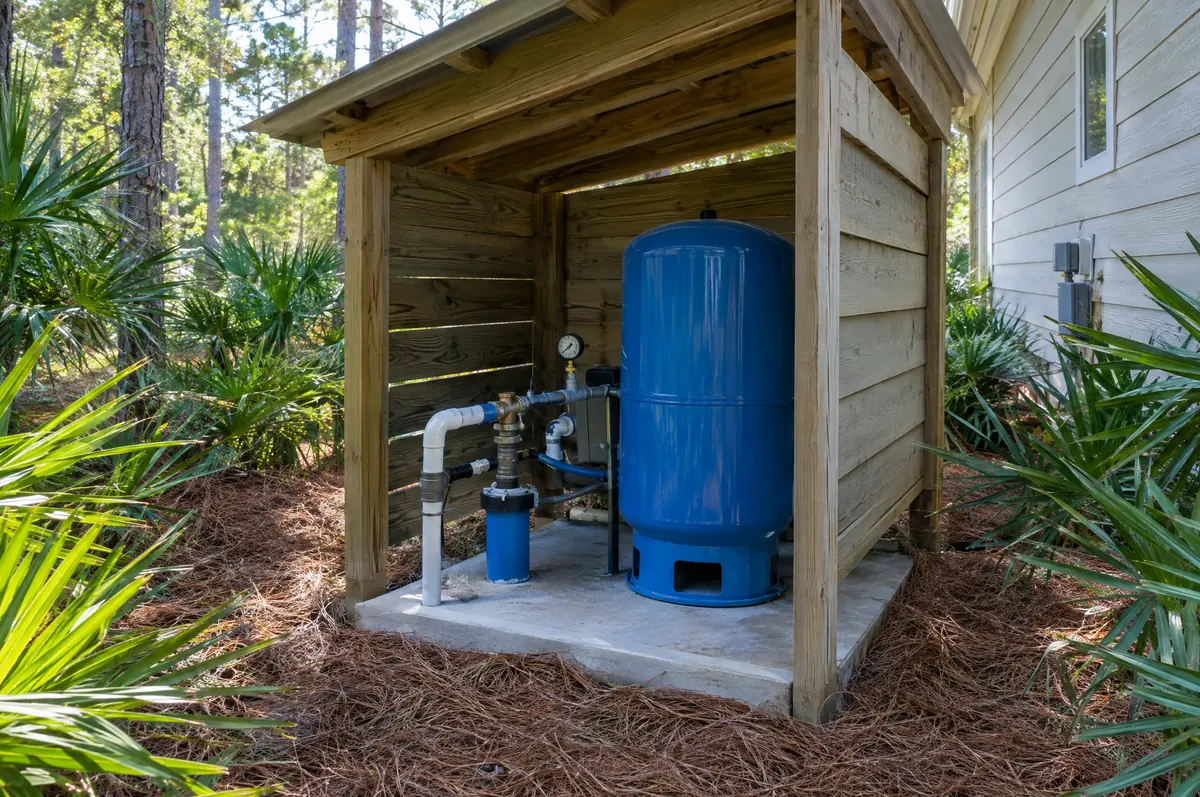
Most private wells in Milton, Pace, Navarre, Cantonment, Molino and Century tap the Sand-and-Gravel Aquifer, a layer of sand and gravel with clay lenses that USGS names as the primary water source for both counties. Deeper down lies the Upper Floridan Aquifer, which few household wells here reach.
Rain soaks quickly through the sandy soil to recharge this aquifer, which is why well water here is usually soft and low in dissolved minerals. USGS reports dissolved solids ordinarily below 50 mg/L. The same geology explains the local problems: the water is naturally slightly acidic, and it picks up iron from the sediments it passes through.
Toward the northeast, the clay layers thin out and the Sand-and-Gravel Aquifer sits directly on the Upper Floridan. Your well’s depth and location matter, so two neighbors can have very different water.
What problems show up most in local private wells?
The regional water management district names low pH and high iron as the most likely problems in this aquifer, with manganese showing up less often. Hydrogen sulfide odor, sand or silt, and bacteria are also common complaints. Some wells can carry naturally occurring radionuclides, which only a lab test can reveal.
- Low pH (acidic water). USGS puts typical pH near 6.0, below the EPA’s 6.5–8.5 guideline. Acidic water can corrode copper and brass plumbing and leave a metallic taste.
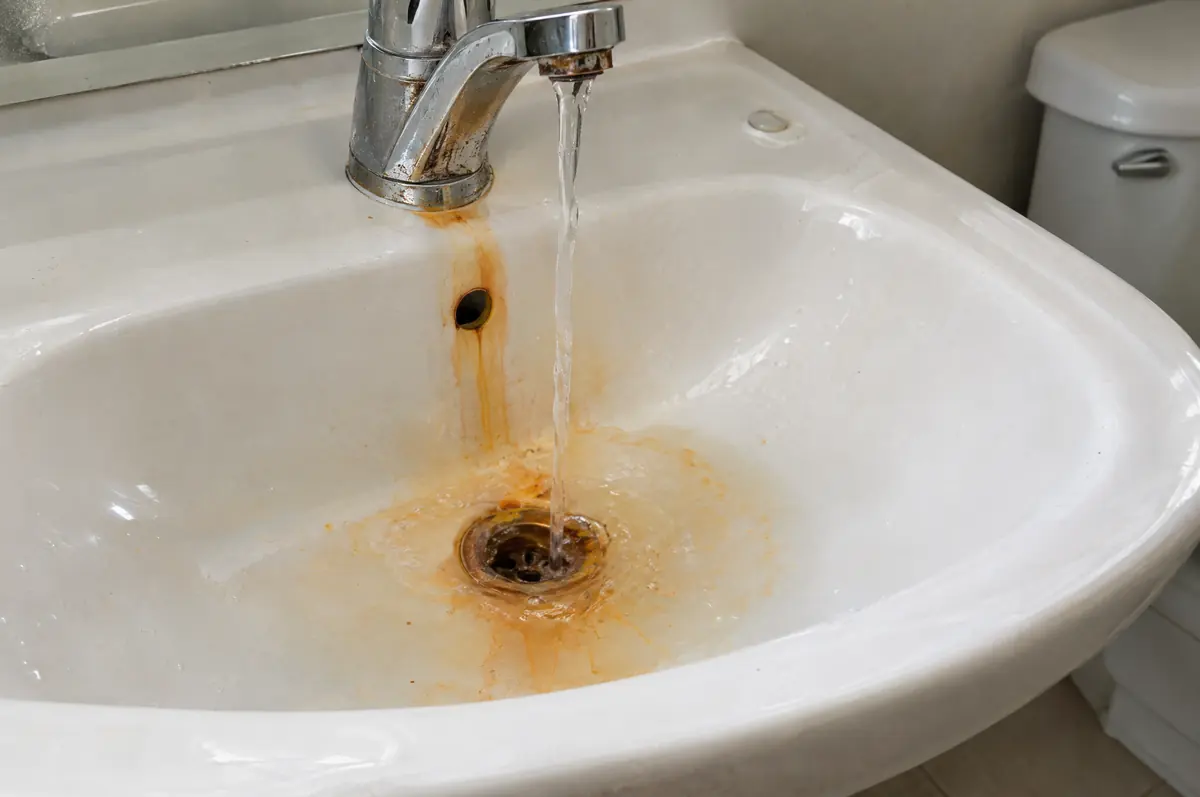
- Iron and manganese. Both occur naturally here. Iron leaves orange-red stains; manganese leaves brown-black ones.
- Hydrogen sulfide. The rotten egg smell usually comes from sulfur-reducing bacteria living in low-oxygen wells or plumbing, or from a reaction inside the water heater.
- Sand, silt and turbidity. Grit in aerators, toilet tanks or appliance screens means particles are coming up with the water.
- Bacteria and nitrate. Invisible, and the reason the state recommends a test every year.
- Radionuclides. The Florida Department of Health notes that testing for naturally occurring radiological contaminants may be recommended in some counties.
What is my water telling me?
Stains, smells and grit are useful clues, but they point to a likely cause rather than prove it. Use the table below to match what you see to what you should ask the lab to test. Some of the most important problems, such as bacteria, nitrate and radionuclides, have no symptoms at all.
| What you notice | Likely cause | What to test |
|---|---|---|
| Orange or rust-red stains, metallic taste | Iron | Iron, pH |
| Brown or black stains, bitter taste | Manganese | Manganese, iron |
| Rotten egg smell, often worse in hot water | Hydrogen sulfide or sulfur-reducing bacteria; water heater anode | Hydrogen sulfide, sulfate; compare hot and cold taps |
| Blue-green stains, pinhole leaks, metallic taste | Low pH (corrosive water) | pH, copper, lead |
| Sand or grit in aerators and toilet tanks | Particles drawn up by the well | Turbidity, sediment check; call a licensed well contractor |
| Cloudy water that does not clear | Fine silt or turbidity | Turbidity, iron |
| No symptoms at all | Bacteria, nitrate or radionuclides may still be present | Coliform bacteria, nitrate; ask about radiological tests |
How and where can I get my well tested?
Start with your county health department. The Florida Department of Health in Escambia County collects bacteria and chemical samples from private wells for a fee, and the Santa Rosa office handles drinking water questions by phone. You can also use any laboratory certified by the Florida Department of Health, searchable in the Florida DEP certified laboratory database.
Escambia County: the local health department charges fees for sample collection and laboratory testing. Call (850) 595-6700 to confirm current fees and scheduling.
Santa Rosa County: the health department’s Environmental Public Health office oversees private water systems. Call (850) 983-5275 to ask what testing it currently offers and how to collect a sample.
Statewide, the Department of Health’s public health laboratories in Jacksonville and Miami also test well water, requested with form DH655. For a wider panel, including iron, manganese, hydrogen sulfide and radiological tests, use the Florida Department of Health certified laboratory program to find a certified lab.

How often should a private well be tested?
Test at least once a year. The EPA and CDC recommend an annual test for total coliform bacteria, nitrates, total dissolved solids and pH, and the Florida Department of Health recommends yearly bacteria and nitrate testing, plus lead every three years for most homeowners.
Test again right away if the water’s taste, color or smell changes, after flooding or nearby construction, after any repair to the well or pump, or when someone in the home is pregnant or a child moves in.
What can a filter fix, and what needs different treatment?
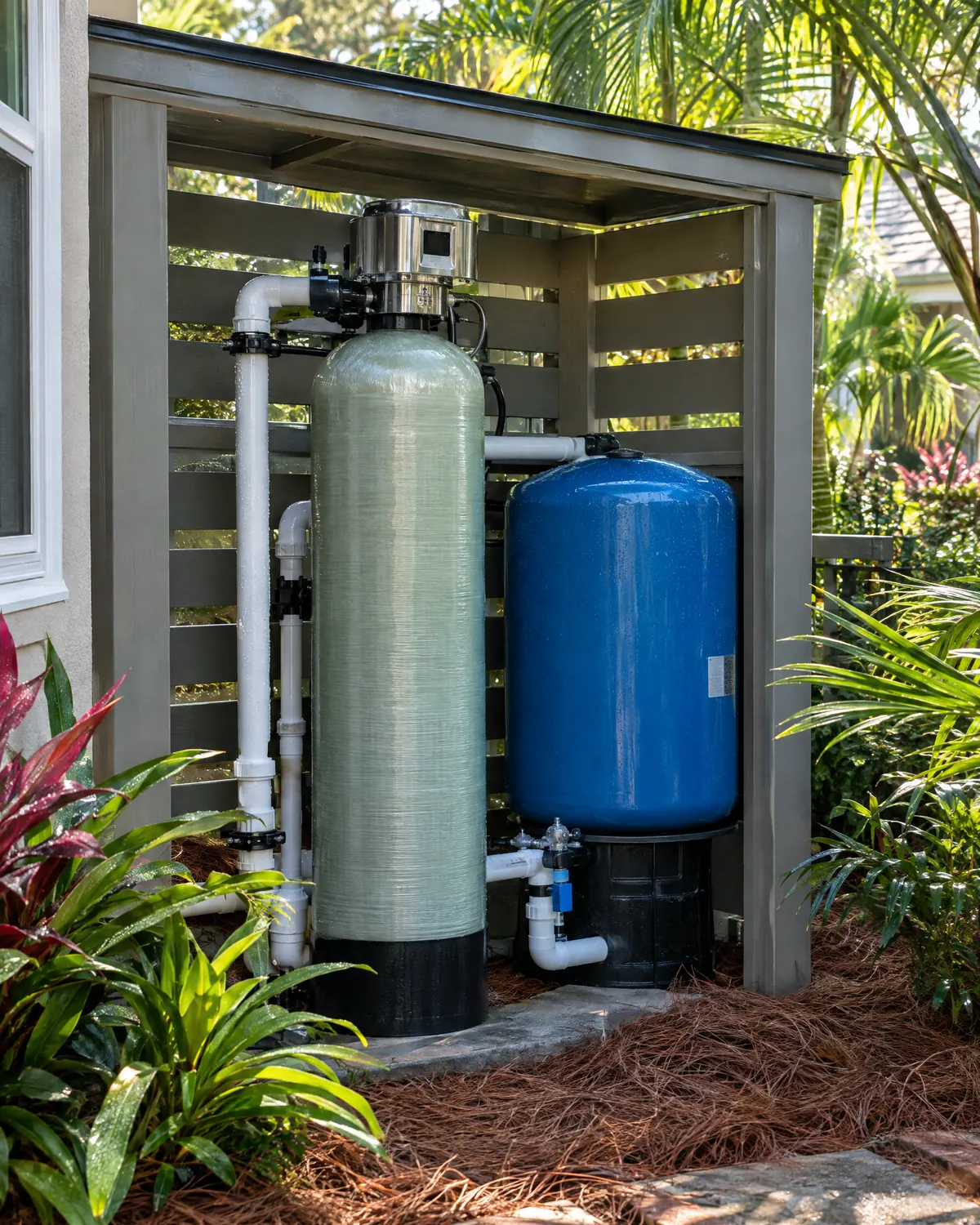
Healthy Water Man’s Well Water Sediment Filter removes sand, silt, rust particles and turbidity down to under 3 microns and cleans itself by back-flushing. It does not treat dissolved iron, manganese, hydrogen sulfide, bacteria or low pH. Those need their own, test-matched treatment.
Particles you can see are a mechanical problem, and the Well Water Sediment Filter is built for exactly that. It uses a timed automatic backwash, instead of routine disposable cartridges; media and valve service still apply. If a lab test shows a radiological concern, The GOAT adds radon and radionuclide reduction.
Dissolved iron and hydrogen sulfide usually call for oxidation filtration. Bacteria call for disinfection and a check of the well itself. Acidic water is typically corrected with a neutralizer. We do not claim to treat those problems, and we will tell you plainly when you need a specialist.
Healthy Water Man offers a free in-home water test and consultation across Escambia and Santa Rosa counties, and will tell you honestly what your water needs, even when the answer is not one of our systems.
What else do people ask?
Why does my well water smell like rotten eggs?
The smell is hydrogen sulfide gas. It usually comes from sulfur-reducing bacteria that thrive in low-oxygen wells and plumbing, or from a reaction with the water heater’s magnesium anode rod. If it only happens on the hot side, the heater is the likely source. Oxidation is the most common treatment for well-wide sulfur odor.
Will a sediment filter remove iron stains?
Only if the iron is already in particle form, such as rust flakes. Most iron in local wells is dissolved and passes through a sediment filter. Dissolved iron needs oxidation filtration or a similar treatment sized to your lab results. We will tell you which kind you have before recommending anything.
Is it normal to have sand in well water in Milton or Navarre?
The local aquifer is literally sand and gravel, so some fine particles are common. A sudden increase, or grit that damages fixtures, can point to a problem with the well screen or pump, and a licensed well contractor should check it. For steady fine sediment, a self-cleaning sediment filter protects plumbing and appliances.
Does the county health department test well water for free?
No. The Florida Department of Health in Escambia County charges fees for sample collection and laboratory testing; contact the department for current pricing. In Santa Rosa County, call the Environmental Public Health office at (850) 983-5275 for current options. Healthy Water Man’s in-home water test is free.
Sources
- U.S. Geological Survey: Ground Water Atlas, Sand and Gravel Aquifer
- U.S. Geological Survey: Ground-water recharge in Escambia and Santa Rosa Counties, Florida
- Northwest Florida Water Management District: Availability of Ground Water from the Sand-and-Gravel Aquifer (2004)
- EPA: Secondary Drinking Water Standards
- EPA: Protect Your Home’s Water (private wells)
- CDC: Guidelines for Testing Well Water
- Florida Department of Health: Private Well Testing
- Florida Department of Health in Escambia County: Drinking Water
- Florida Department of Health in Santa Rosa County: Drinking Water
- Florida Department of Health: Well Water Testing (public health laboratories)
- Penn State Extension: Hydrogen Sulfide (Rotten Egg Odor) in Water Wells